
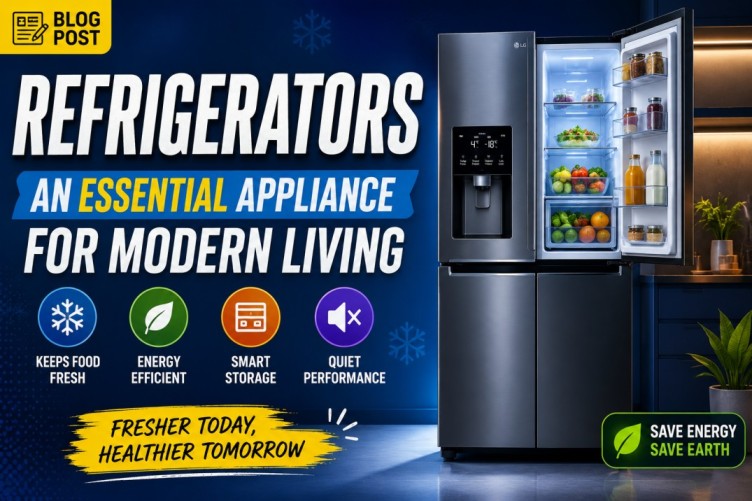
Refrigerators are one of the most important household appliances in modern homes. They help preserve food, keep beverages cold, and reduce food waste by maintaining fresh storage conditions. From small apartments to large family kitchens, refrigerators have become a necessity for comfortable and convenient living.
Over the years, refrigerator technology has evolved significantly, offering smarter features, improved energy efficiency, and stylish designs that fit modern lifestyles.
What Is a Refrigerator?
A refrigerator is an electrical appliance designed to keep food and drinks cold by slowing down bacterial growth. It works by removing heat from the inside compartment and releasing it outside, helping maintain low temperatures for food preservation.
Most refrigerators include:
- A fresh food compartment
- A freezer section
- Adjustable shelves and storage drawers
- Temperature control systems
Modern refrigerators are designed not only for cooling but also for convenience, energy savings, and better organization.

5
How Does a Refrigerator Work?
Refrigerators operate using a cooling process called the refrigeration cycle. This process involves several important components:
Compressor
The compressor circulates refrigerant throughout the system and increases its pressure.
Condenser Coils
These coils release heat from the refrigerator to the outside environment.
Evaporator Coils
The evaporator absorbs heat from inside the refrigerator, helping keep the interior cool.
Refrigerant
A special cooling liquid that transfers heat through the system.
Together, these components create continuous cooling to preserve food freshness and prevent spoilage.
Types of Refrigerators
There are different refrigerator styles designed for various household needs and kitchen spaces.
Single-Door Refrigerators
Compact and affordable models suitable for small families and apartments.
Double-Door Refrigerators
These refrigerators have separate freezer and cooling compartments, offering more storage and better organization.
Side-by-Side Refrigerators
Stylish models with vertical freezer and refrigerator sections placed next to each other.
French Door Refrigerators
Premium refrigerators with double doors on top and freezer drawers below, known for modern designs and large storage capacity.
Smart Refrigerators
Advanced refrigerators with Wi-Fi connectivity, touchscreens, voice assistants, and smart inventory management.


5
Benefits of Refrigerators
Refrigerators offer several advantages that improve daily life.
Food Preservation
They keep fruits, vegetables, dairy products, and cooked meals fresh for longer periods.
Reduced Food Waste
Proper cooling helps prevent food spoilage and saves money.
Convenience
People can store meals, beverages, and frozen foods for easy access anytime.
Better Hygiene
Cold storage slows bacterial growth, helping maintain food safety.
Energy-Efficient Storage
Modern refrigerators are designed to use less electricity while providing better cooling performance.
Features of Modern Refrigerators
Today’s refrigerators include many advanced features such as:
- Frost-free cooling systems
- Inverter technology
- Digital temperature controls
- Water and ice dispensers
- Smart connectivity
- Adjustable humidity settings
- Energy-saving modes
Popular brands like Samsung, Whirlpool, and LG continue developing innovative refrigerator technologies for modern consumers.


6
Tips for Refrigerator Maintenance
Proper maintenance helps improve refrigerator performance and lifespan.
- Clean the refrigerator regularly
- Avoid overloading shelves
- Keep the door seals clean and tight
- Set the correct temperature
- Defrost manually if needed
- Ensure proper airflow around the appliance
Regular servicing can also help reduce energy consumption and improve cooling efficiency.
The Future of Refrigerators
Refrigerator technology continues to advance with a focus on smart automation and sustainability. Future refrigerators may include:
- AI-powered food tracking
- Voice-controlled systems
- Eco-friendly refrigerants
- Improved energy efficiency
- Smart grocery management
As smart homes become more common, refrigerators will play an even bigger role in connected living environments.
Conclusion
Refrigerators are an essential part of modern living, providing convenience, food safety, and efficient storage solutions for households worldwide. From basic cooling systems to advanced smart refrigerators, this appliance has transformed the way people store and manage food. With ongoing innovation and energy-efficient technologies, refrigerators will continue to evolve and improve daily life for future generations.