
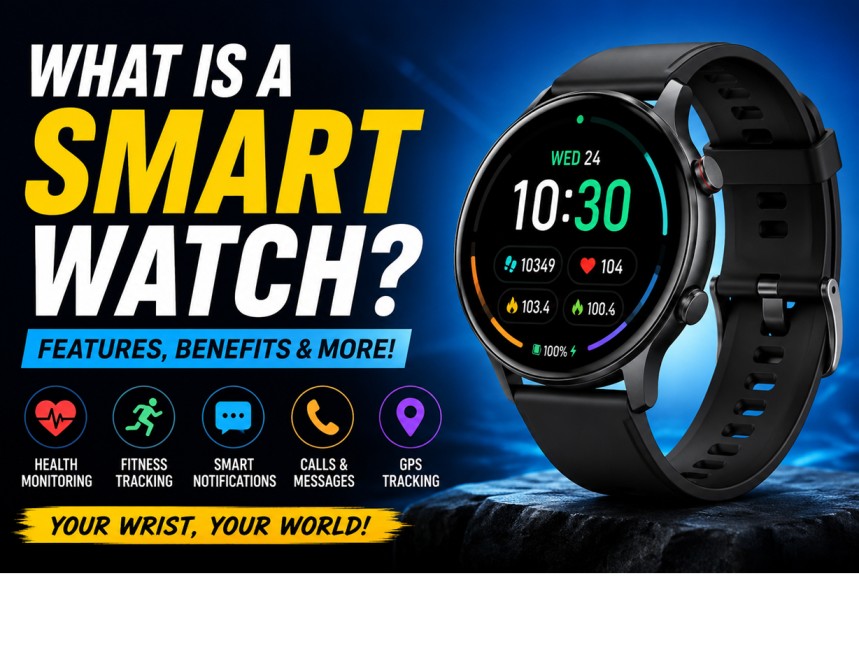
Smart watches have become one of the most popular wearable technologies in recent years. These modern devices do much more than simply display time. From tracking fitness activities and monitoring health to receiving notifications and making calls, smart watches have transformed the way people stay connected and manage their daily lives.
With stylish designs and advanced features, smart watches are now considered both fashion accessories and powerful digital companions.
Understanding a Smart Watch
A smart watch is a wearable electronic device designed to be worn on the wrist like a traditional watch. Unlike regular watches, smart watches connect to smartphones and offer a wide range of digital functions such as notifications, fitness tracking, GPS navigation, music control, and health monitoring.
Most smart watches use touchscreens and support wireless technologies like Bluetooth and Wi-Fi for connectivity.

6
How Does a Smart Watch Work?
Smart watches typically pair with smartphones through Bluetooth technology. Once connected, they can display calls, messages, emails, app alerts, and other notifications directly on the watch screen.
Many smart watches also contain built-in sensors that track physical activities and health data such as:
- Heart rate
- Steps walked
- Calories burned
- Sleep quality
- Blood oxygen levels
Some advanced models even support voice assistants, contactless payments, and independent cellular connectivity.
Key Features of Smart Watches
Modern smart watches include a variety of useful features designed for convenience and productivity.
Fitness Tracking
Smart watches can monitor workouts, running distance, cycling, and other physical activities.
Health Monitoring
Many devices track heart rate, stress levels, sleep patterns, and overall wellness.
Smartphone Notifications
Users can receive calls, text messages, social media alerts, and emails instantly.
GPS Navigation
Built-in GPS helps users track routes during walking, running, or traveling.
Music and Media Control
Smart watches can control music playback without needing to use a smartphone.
Voice Assistants
Some watches support voice assistants like Apple Siri and Google Assistant.


6
Types of Smart Watches
There are several categories of smart watches available for different needs and lifestyles.
Fitness Smart Watches
Focused mainly on activity tracking, exercise monitoring, and health features.
Hybrid Smart Watches
These combine traditional watch designs with smart features.
Luxury Smart Watches
Premium devices with stylish materials and advanced technology.
Kids’ Smart Watches
Designed for children with GPS tracking and communication features.
Standalone Smart Watches
These models support SIM cards and can function independently without smartphones.
Benefits of Smart Watches
Smart watches provide many advantages in everyday life.
Convenience
Users can quickly check notifications and calls without constantly using their phones.
Better Fitness Awareness
Health and fitness tracking encourage healthier lifestyles.
Time Management
Calendar reminders, alarms, and productivity tools improve organization.
Stylish Technology
Modern smart watches combine fashion with functionality.
Emergency Features
Some smart watches include fall detection and emergency SOS alerts for safety.
Popular Smart Watch Brands
Several technology companies manufacture high-quality smart watches with advanced features. Popular brands include:
- Apple
- Samsung
- Garmin
- Fitbit
- Boat
These brands offer smart watches for fitness enthusiasts, professionals, travelers, and everyday users.


6
The Future of Smart Watches
Smart watch technology continues to improve rapidly. Future innovations may include:
- Advanced health diagnostics
- AI-powered personal assistants
- Longer battery life
- Flexible or holographic displays
- Improved medical monitoring
- Better smart home integration
As wearable technology becomes more advanced, smart watches will play an even bigger role in health, communication, and personal productivity.
Conclusion
Smart watches are much more than digital timepieces. They combine technology, fitness, communication, and convenience into a compact wearable device. Whether used for health tracking, productivity, or entertainment, smart watches have become an important part of modern lifestyles. With ongoing technological advancements, these devices are expected to become even smarter and more useful in the future.