
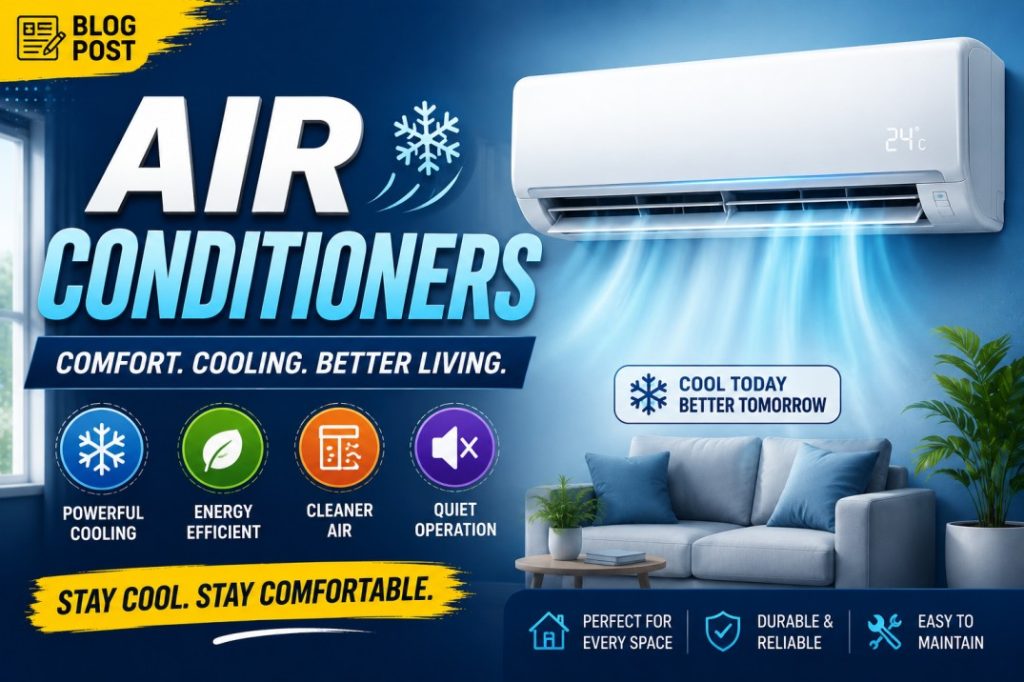
Air conditioners have become an essential part of modern life, especially in regions with hot and humid climates. From homes and offices to shopping malls and cars, air conditioners help create comfortable indoor environments by controlling temperature and humidity. With rising global temperatures and growing demand for comfort, air conditioning technology continues to evolve rapidly.
Understanding an Air Conditioner
An air conditioner, commonly called an AC, is an electronic device designed to cool indoor spaces by removing heat and humidity from the air. It works by circulating cool air throughout a room or building, making the environment more comfortable during warm weather.
Most air conditioners use a refrigeration cycle to transfer heat from inside a room to the outside environment. Modern AC systems can also improve air quality by filtering dust, allergens, and pollutants.


How Does an Air Conditioner Work?
Air conditioners work through a cooling process involving several key components:
Compressor
The compressor pumps refrigerant through the system and increases its pressure.
Condenser Coil
The condenser releases heat absorbed from inside the room to the outdoor environment.
Evaporator Coil
The evaporator absorbs heat from indoor air, helping cool the room.
Refrigerant
This special fluid circulates through the AC system and carries heat away from indoor spaces.
Fan System
Fans help circulate cool air throughout the room for even cooling.
Together, these components create a continuous cycle that removes warm air and replaces it with cool, refreshing air.
Types of Air Conditioners
There are several types of air conditioners available for different cooling needs.
Split Air Conditioners
Split ACs are among the most popular options for homes and offices. They include an indoor unit and an outdoor unit, offering efficient cooling with quieter operation.
Window Air Conditioners
These compact units are installed in windows and are suitable for cooling single rooms.
Portable Air Conditioners
Portable ACs can be moved easily from one room to another and are ideal for temporary cooling needs.
Central Air Conditioning
Central AC systems cool entire buildings through ducts and are commonly used in large homes, hotels, and offices.
Smart Air Conditioners
Modern smart ACs can connect to Wi-Fi and be controlled using smartphones or voice assistants.

5
Benefits of Air Conditioners
Air conditioners provide several important advantages beyond cooling.
Comfortable Indoor Environment
They maintain pleasant temperatures during hot summers.
Better Air Quality
Many ACs include filters that reduce dust, smoke, pollen, and allergens.
Improved Sleep
Cooler temperatures can help people sleep more comfortably at night.
Increased Productivity
Comfortable environments in offices and workplaces improve focus and efficiency.
Humidity Control
Air conditioners reduce excess moisture, preventing mold and unpleasant odors.
Energy Efficiency and Modern Technology
Modern air conditioners are designed to use less electricity while delivering better performance. Technologies such as inverter compressors and energy-saving modes help reduce power consumption.
Brands like LG, Daikin, and Samsung offer energy-efficient air conditioners with smart features and eco-friendly refrigerants.


6
Tips for Maintaining an Air Conditioner
Proper maintenance helps improve the lifespan and performance of an air conditioner.
- Clean or replace air filters regularly
- Keep the outdoor unit free from dust and debris
- Schedule professional servicing annually
- Avoid setting extremely low temperatures
- Use energy-saving modes when possible
Regular maintenance also helps reduce electricity bills and improves cooling efficiency.
The Future of Air Conditioning
The future of air conditioning technology focuses on energy efficiency, smart automation, and sustainability. Manufacturers are developing systems with:
- AI-based temperature control
- Solar-powered cooling systems
- Eco-friendly refrigerants
- Advanced air purification technology
- Smart home integration
As climate conditions continue to change, innovative cooling solutions will become increasingly important worldwide.
Conclusion
Air conditioners play a major role in improving comfort, productivity, and indoor air quality. From small window units to advanced smart cooling systems, AC technology has transformed modern living. With ongoing advancements in energy efficiency and smart features, air conditioners are becoming more effective, environmentally friendly, and convenient for everyday use.