
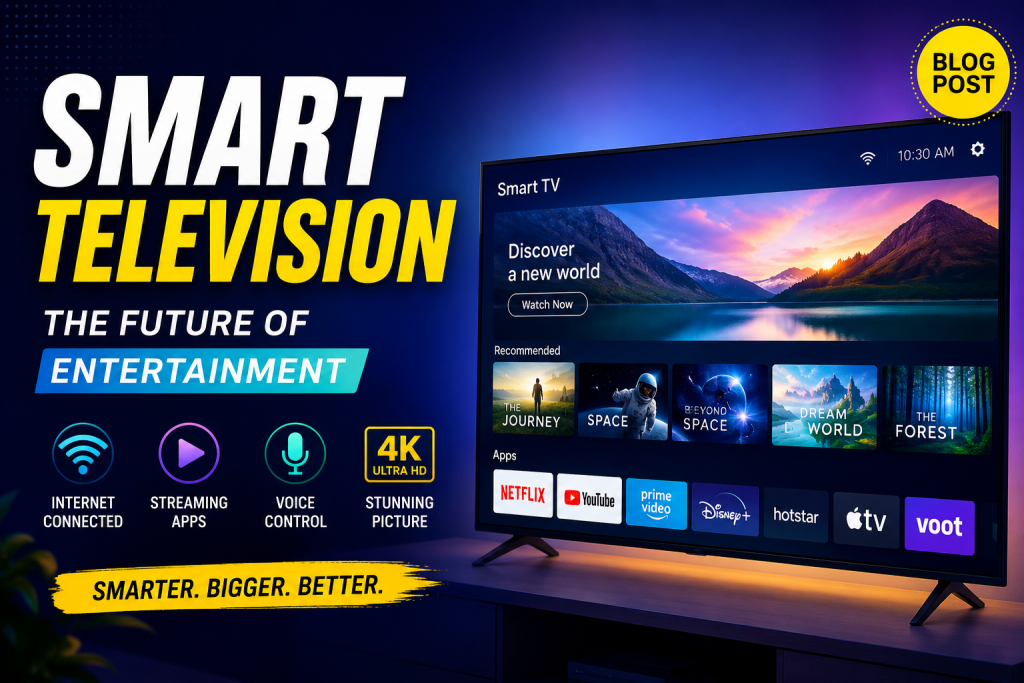
Television has come a long way from its humble beginnings as a bulky box with blurry black-and-white visuals. Over the decades, TV technology has evolved dramatically, transforming the way people consume entertainment, news, sports, and education. Today, smart televisions offer ultra-high-definition displays, voice control, internet connectivity, and access to countless streaming platforms. The journey of television reflects the rapid pace of innovation in modern technology.
The Birth of Television
The first television systems were developed in the early 20th century. In the 1920s and 1930s, experimental broadcasts began appearing in a few countries. Early televisions displayed black-and-white images with very low resolution. These sets were expensive and considered luxury items, owned by only a small number of households.
Despite their limitations, black-and-white televisions quickly became popular because they brought live entertainment and news directly into people’s homes. Families gathered around the TV to watch dramas, sports events, and historical moments unfold in real time.

6
The Rise of Color Television
The introduction of color television in the 1950s and 1960s revolutionized home entertainment. Watching shows and movies in color made television more immersive and exciting. By the 1970s, color TVs became increasingly affordable, and many households upgraded from black-and-white sets.
This era also saw the rise of cable television, giving viewers access to a wider variety of channels, including sports, movies, music, and educational content. Television became a central part of family life and popular culture.
The Era of CRT and Remote Controls
Cathode Ray Tube (CRT) televisions dominated homes for many years. These bulky sets were known for their durability and decent picture quality. One of the biggest innovations during this period was the invention of the remote control, which allowed viewers to change channels and adjust volume without leaving their seats.
As television networks expanded globally, audiences gained access to international news, sitcoms, cartoons, and blockbuster movies. Television advertising also became a powerful marketing tool for businesses worldwide.
6
The Shift to Flat-Screen TVs
In the late 1990s and early 2000s, flat-screen televisions transformed the industry. Plasma, LCD, and later LED TVs replaced bulky CRT sets with slim and stylish designs. These televisions offered sharper images, better sound quality, and larger screen sizes.
High-definition (HD) broadcasting improved the viewing experience significantly. Sports events, movies, and video games looked more realistic than ever before. Consumers also began connecting DVD players, gaming consoles, and home theater systems to their TVs.
The Smart TV Revolution
Modern smart TVs have completely changed how people consume content. Unlike traditional televisions, smart TVs connect directly to the internet and provide access to streaming platforms such as Netflix, YouTube, and Amazon Prime Video.
Today’s televisions feature technologies such as:
- 4K and 8K ultra-HD resolution
- Voice assistants and AI recommendations
- Wireless screen mirroring
- Online gaming support
- Smart home integration
- OLED and QLED display technology
Smart TVs are no longer just devices for watching programs — they have become complete entertainment hubs for movies, gaming, music, video calls, and internet browsing.

7
The Future of Television
The future of television looks even more exciting. Innovations such as artificial intelligence, virtual reality, holographic displays, and personalized content recommendations are expected to shape the next generation of entertainment.
Streaming services are also changing viewing habits, allowing audiences to watch content anytime and anywhere. Traditional cable TV is gradually declining as more consumers switch to on-demand digital platforms.
Television has evolved from simple black-and-white screens to intelligent entertainment systems that connect the world through technology. As innovation continues, TVs will become even smarter, more interactive, and more immersive in the years ahead.
Conclusion
The evolution of television showcases the incredible progress of technology over the past century. From grainy black-and-white broadcasts to stunning smart TVs with internet connectivity, television has continuously adapted to changing consumer needs. It remains one of the most influential inventions in human history, shaping entertainment, communication, and culture across generations.